



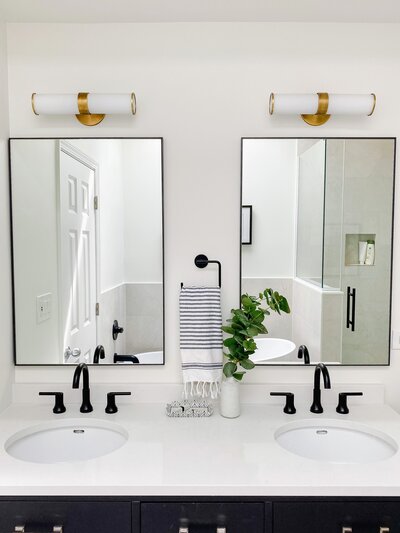
Before we ever choose a sofa, a tile, or a paint color for a project, we begin by asking the quieter questions. How should this space feel when you’re living in it? Calm. Energizing. Cozy. Playful. Grounded. A little unexpected.
That’s exactly where moodboards come in. They’re not just about deciding how a room should look. They’re about setting the emotional and creative direction for everything that follows and, ultimately, bringing a space from idea to reality.
Step 1: Using Moodboards to Set the Tone
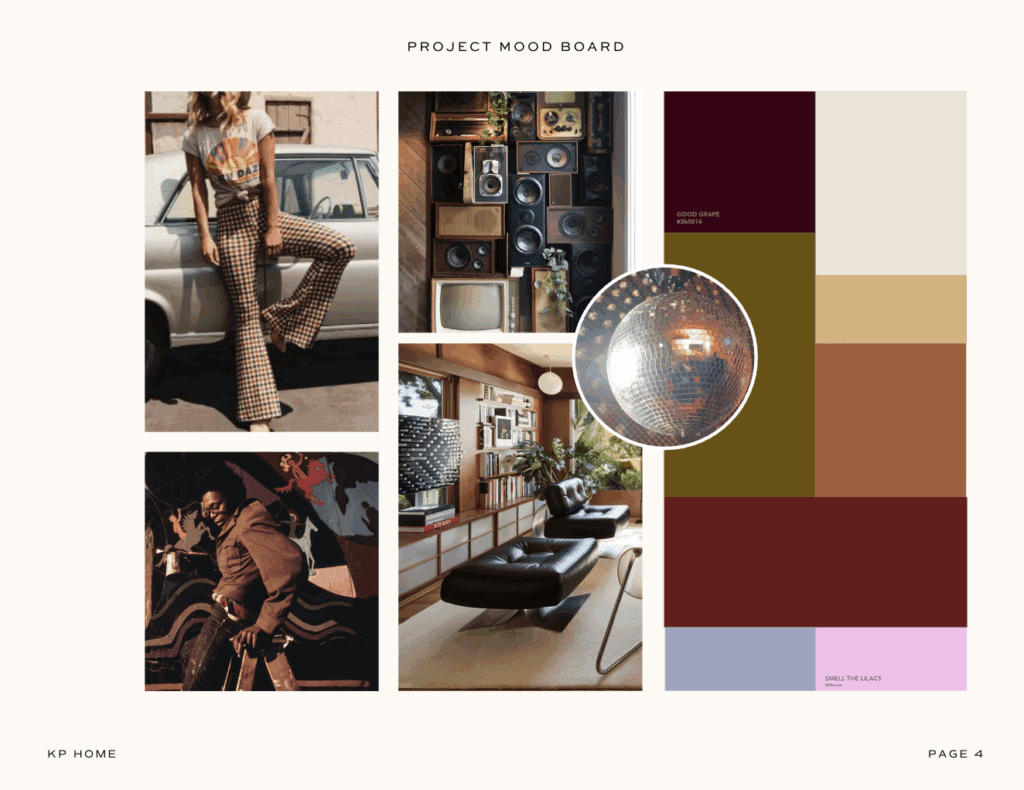
At their core, moodboards are a way to establish direction. They help us align on tone, atmosphere, and intention before we ever get into the details. I usually think about moodboards in two layers.
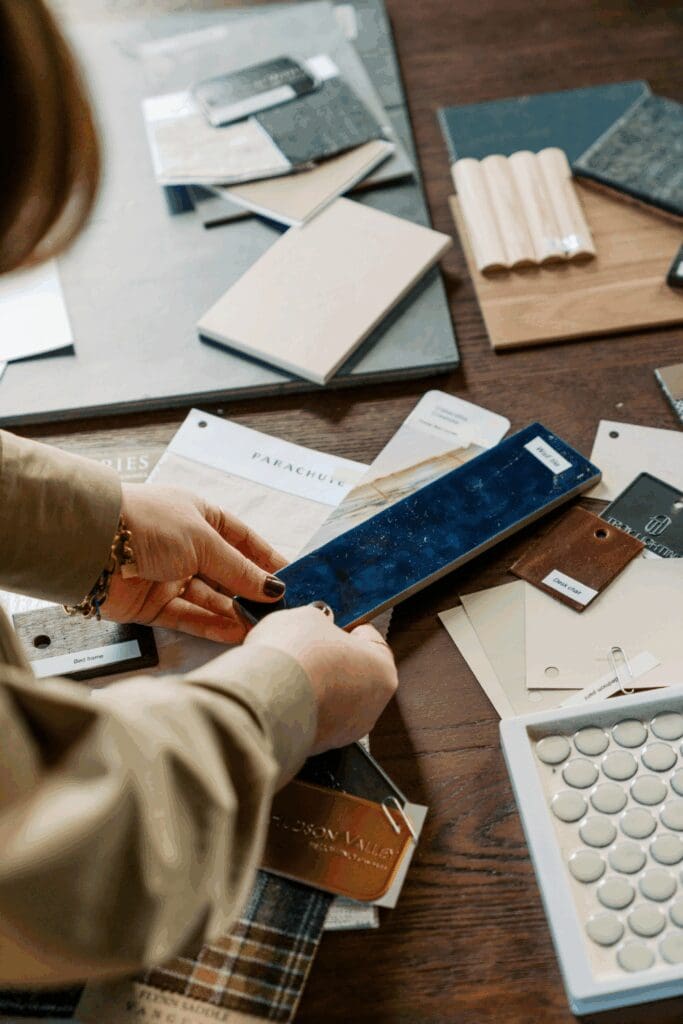
The first is what most people imagine. A more traditional design moodboard that includes tactiles like fabrics, furniture pieces, finishes, and colors. This helps visually communicate the design direction and gives you something tangible to react to early on.
The second layer is more intuitive and more about mindset. It might include abstract imagery, lifestyle photos, textures, or even words pulled directly from what a client has said they want from the space. This board helps me step into the world of the project creatively and stay grounded in the feeling we’re trying to create.
Together, these boards become a visual language we can return to again and again as decisions build on one another.
Step 2: Narrowing Options Without Limiting Possibility
Behind the scenes, I usually have multiple design boards going at once. I’m testing ideas, swapping elements in and out, and seeing how things interact with one another.
As my client, you don’t see all of that. And you shouldn’t.
By the time we present, everything has been narrowed thoughtfully to remove any extra decision fatigue too many options might cause. Often, I’ll show two options for a room: Option A and Option B. I’ve found that, especially in the conceptual phase, this is incredibly helpful for my clients.
One option might feel safer or more familiar. The other might push just slightly outside your comfort zone. Seeing both helps clarify not only what you’re drawn to, but what’s possible. It allows you to make confident choices while still keeping the overall vision cohesive.
A big part of my job also happens quietly in the background. Every piece selected carries layers of intention. It’s never just about choosing a dining chair. It’s about how long someone can comfortably sit there. Whether it has arms so guests linger a little longer. How the back feels. How it fits the aesthetic of the home. How much care and maintenance it will require over time… there is so much that goes into these selections that you will never see.
The same goes for materials. With tile alone, there are decisions around spacing, grout color and type, layout, orientation, and how exposed edges are finished. And believe me, all of those choices shape how a space feels and functions, even if you don’t consciously notice them.
Step 3: Presenting Options
This may surprise you, but when clients love more than one option that’s actually a really good thing.
My approach is always to ask questions. Why are you drawn to this? What about it feels right?
In my experience, if you love something immediately, trust that instinct. And if something makes you a little nervous but you keep coming back to it, that’s usually a sign too. Often, the hesitation comes from the permanence of a decision or possibly even the investment involved, not from the design itself.
Design isn’t about taking risks for the sake of it. It’s about making intentional choices that honor your personal style while elevating what a space can be.
Case Study: West Town Kid’s Play Emporium
There’s something especially fun about showing a project from its very first concept to how it ultimately comes to life, and the West Town Kid’s Play Emporium is the perfect example of that journey. This space was designed as a playful, bright, and inspiring space for two young kids. The goal was to create a room that feels imaginative and exciting now, but that can also evolve with them as they grow.
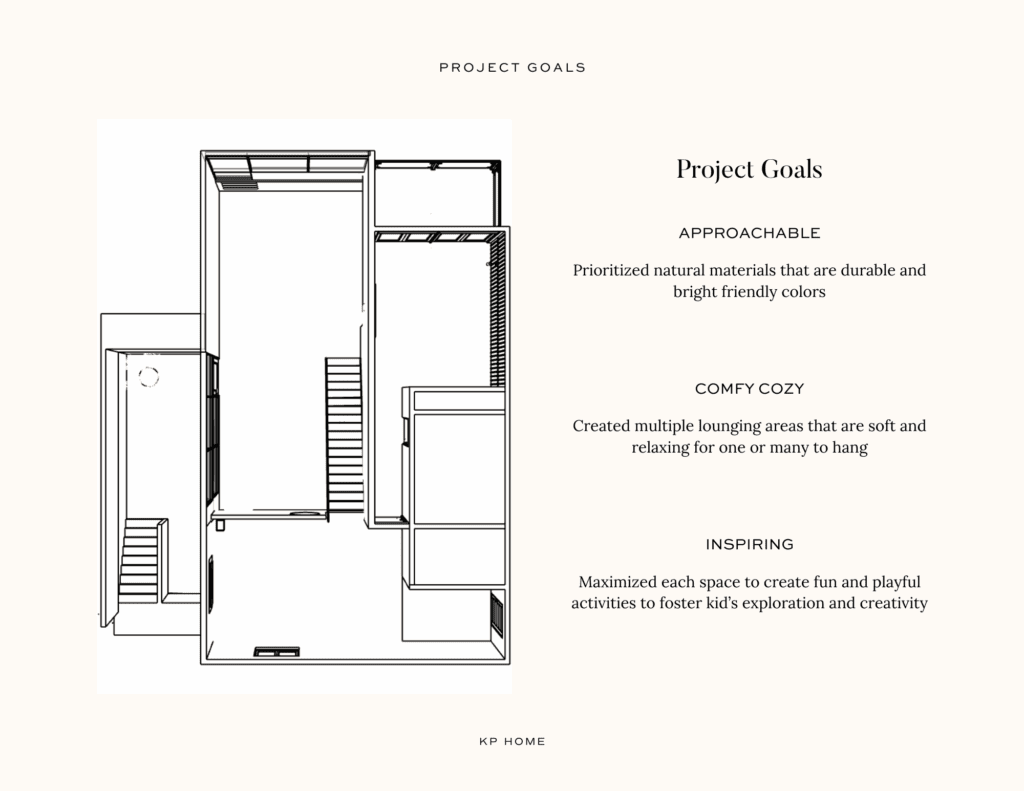
The space needed to do a lot. It had to be a place to relax, a place to let loose, and a place to be fully creative. It also needed to accommodate some very unique features you don’t typically see in a traditional residential setting.
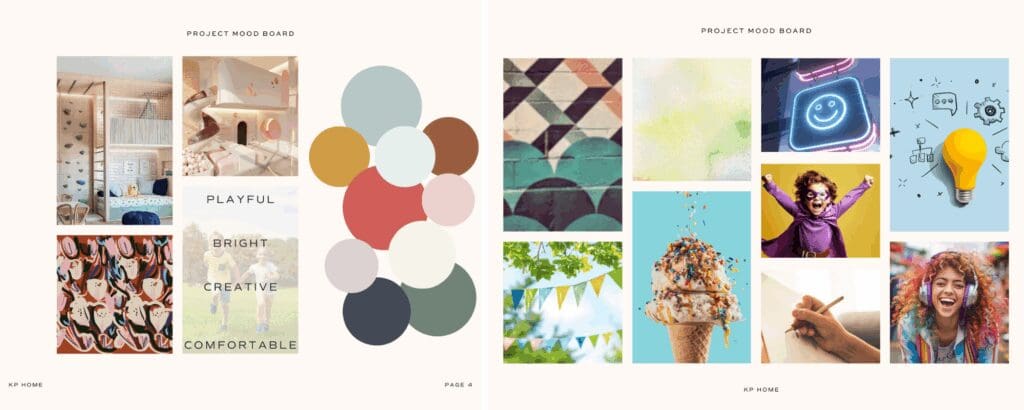
When we presented the initial moodboard, the clients were immediately excited. They felt like it truly captured the vibe they had described, and it sparked even more ideas on their end. That’s always a great sign. When a moodboard inspires conversation and imagination, it’s doing exactly what it’s meant to do.
For this project especially, renderings were absolutely key. We were proposing some unique elements, and being able to visually walk through the space made all the difference. The clients know what they like, and the renderings helped them see how those ideas could come together in a cohesive, intentional way.
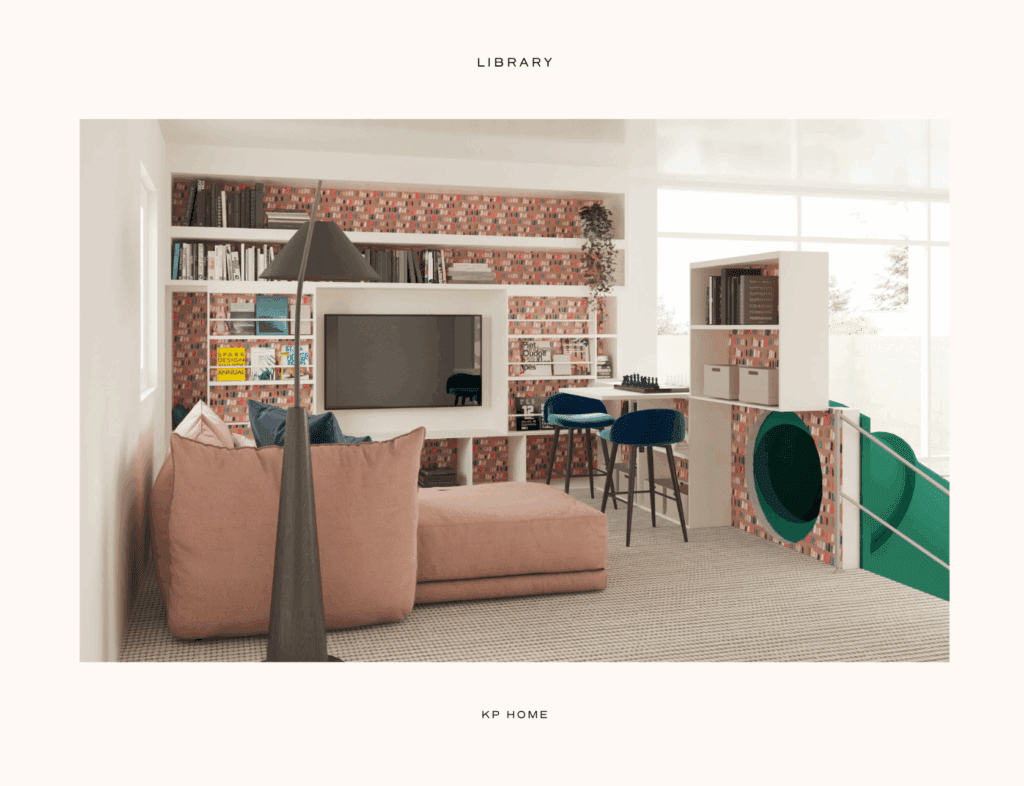
Project Rendering
The process became incredibly collaborative. We could tweak, adjust, and explore possibilities together before anything was built. The jungle gym and slide, for example, went through several iterations to strike the right balance between fun, practicality, and safety. Seeing those changes in 3D helped everyone feel confident in the final decisions.
From my side, renderings are just as valuable. Once I start building the model of a space, it often sparks new ideas and helps clarify what may or may not work before we move forward.
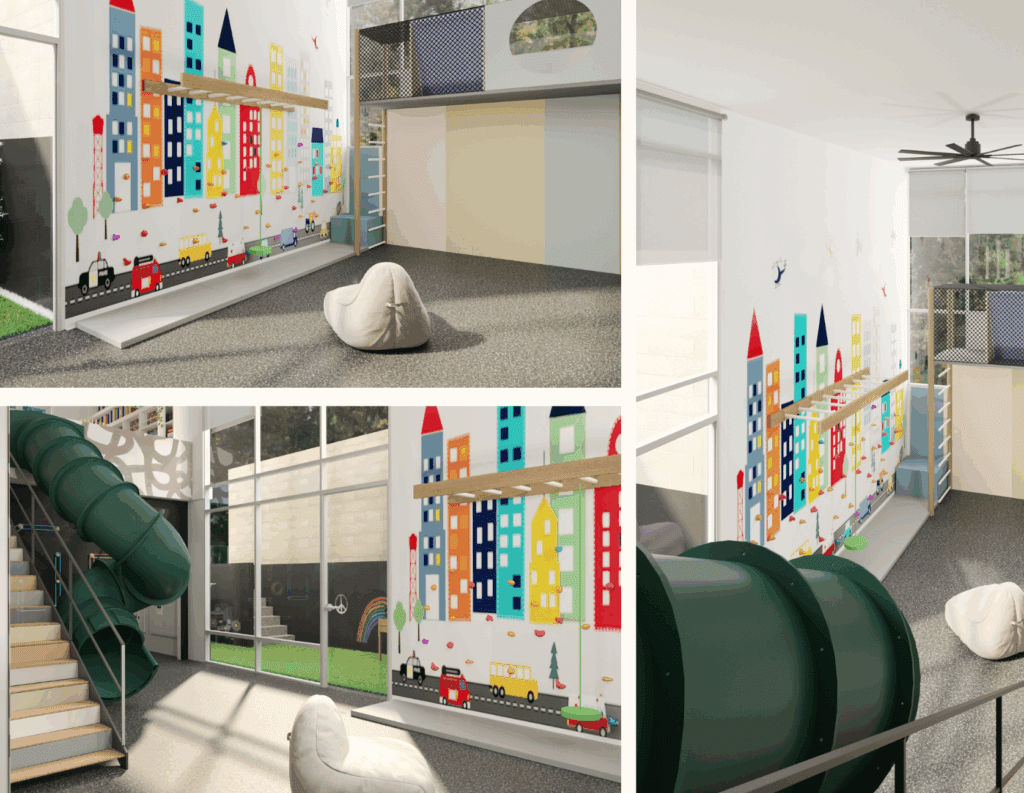
Project Rendering
And then there are the details that bring the space to life. There are so many little moments in this project that I love!
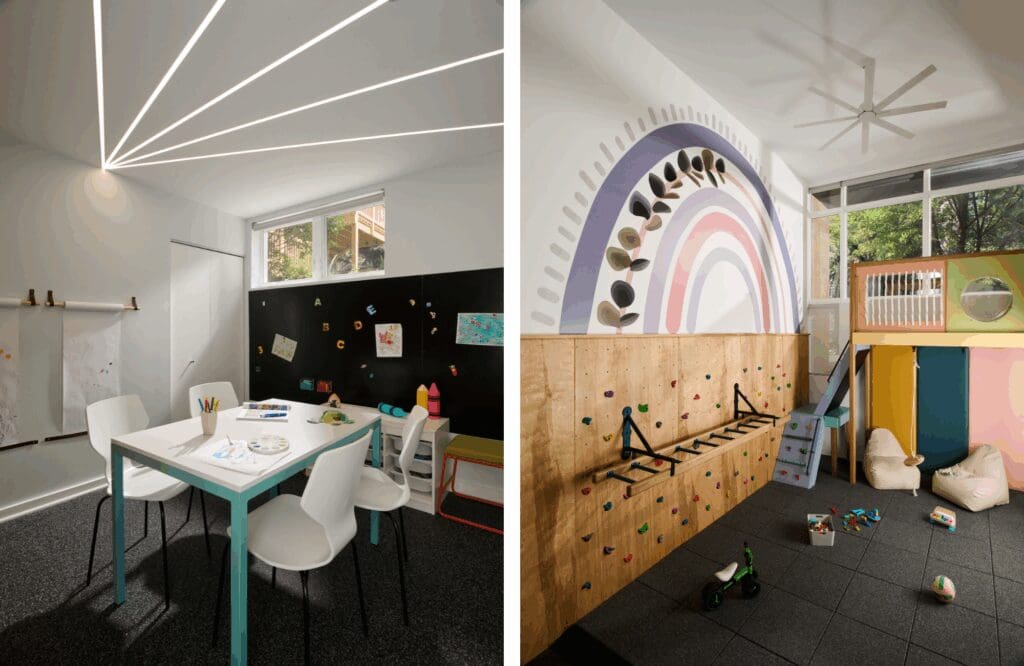
The paper airplane LED light floating across the ceiling (left). The rock wall and jungle gym with attachable swings and tiny LED lights underneath the platform that create a cozy hangout spot (right).
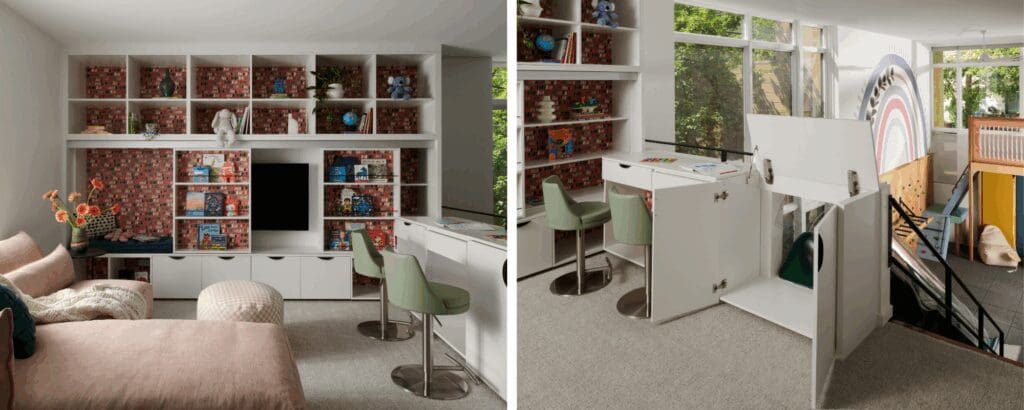
The hidden compartments tucked into the library and slide that make the space feel layered and full of discovery. A childhood dream!
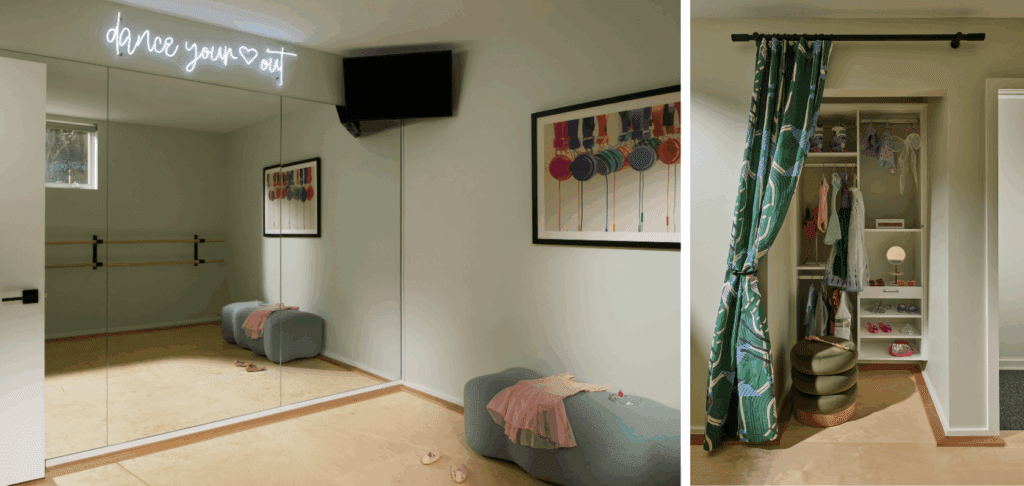
Even the dance room includes a dress-up closet and a real dance studio floor. Every material was chosen with texture, durability, and feeling in mind, knowing this space was meant to be lived in, played in, and loved. If you haven’t taken the full tour yet, it’s definitely worth your while.
It’s such a fun practice for me to look back at original moodboards next to final results. What a great reminder of why we start there. It sets the foundation for every single creative decision. And when it’s done right, the finished space feels like a natural extension of that very first idea.
If you’re ready to explore what your space could become, I’d love to help guide you through that process. When you’re ready, reach out here to start a conversation.
Warmly,
Kristen
ABOUT THE AUTHOR
Kristen Pipal is the founder and principal designer of KP Home. She creates timeless, personality-driven spaces throughout Chicago and beyond. Kristen is especially passionate about helping busy families and professionals enjoy homes that support their lifestyle.